Geno Auriemma’s Meltdown: When Greatness Turns Into Poor Sportsmanship on the Biggest Stage
- Young Horn

- Apr 3
- 2 min read
The spotlight of the NCAA Women’s Final Four wasn’t just on the court Friday night—it shifted sharply to the sideline, where Geno Auriemma let frustration boil over in a way that overshadowed the game itself. In a stunning 62–48 loss, UConn Huskies women's basketball saw its undefeated season come crashing down at the hands of South Carolina Gamecocks women's basketball, led by Dawn Staley. But instead of the story being about South Carolina’s dominance, much of the conversation turned to Auriemma’s reaction—one that many are calling out as a poor display of sportsmanship.
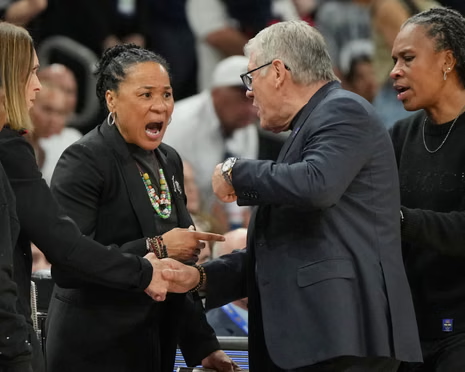
From the moment the game began to slip away, Auriemma’s frustration was visible. During a live in-game interview, he openly criticized officiating, pointing to what he believed was a lopsided whistle and accusing referees of allowing overly physical play against his team. As the second half unfolded, UConn’s offense stalled, its stars struggled, and South Carolina imposed its will—particularly in a decisive third quarter that flipped the game entirely.
But it was the closing moments—and what followed—that turned frustration into controversy.
As the final seconds ticked away, the customary handshake line became anything but routine. Instead of extending a hand, Auriemma approached Staley and exchanged words that quickly escalated into a heated confrontation. The two had to be separated by staff, with emotions spilling over in full view of the national audience. Reports indicated that Auriemma didn’t shake hands with opposing players and walked off visibly upset, further fueling criticism.
For a coach widely regarded as one of the greatest in basketball history—with 12 national championships and a legacy of dominance—this moment felt out of character, or at the very least, disappointing. Great coaches are often defined not just by how they win, but how they lose. And on a night when his team was clearly outplayed—held to one of its lowest scoring outputs in years—Auriemma’s inability to accept the result gracefully became the headline.
Meanwhile, South Carolina earned this win. Their defense suffocated UConn, their physicality dictated the tempo, and their composure never wavered. This wasn’t luck—it was execution. Yet instead of celebrating that performance, much of the postgame narrative centered on the sideline drama.
Social media reaction was swift and unforgiving. Analysts, fans, and even high-profile figures criticized Auriemma’s behavior, with some labeling it “classless” and accusing him of deflecting blame rather than acknowledging defeat. And while emotions are always high in games of this magnitude, the expectation—especially for a Hall of Fame coach—is a level of composure that simply wasn’t there.
In the end, this game should have been remembered as a statement win for South Carolina and another step in their growing dynasty. Instead, it became a case study in how quickly legacy can be questioned—not because of what happened during the game, but because of how a leader chose to handle its outcome.
For Geno Auriemma, this wasn’t just a loss in the standings—it was a rare moment where the standard he helped build didn’t match the way he carried himself when it mattered most.



Comments