2026 MLB Wild Card Preview: Four Best-of-Three Series, Four Very Different Paths to October Survival

The 2026 MLB postseason opens Tuesday with four Wild Card Series that all feel completely different. Philadelphia and Atlanta give us another round of one of baseball’s nastiest divisional rivalries. The Cubs and Padres run back last year’s Wild Card matchup, this time in San Diego. The Yankees and Red Sox meet again with two loaded pitching staffs and a ton of uncertainty surrounding Aaron Judge. Then there is White Sox-Astros, where Chicago finished with the better record but still has to go on the road to play an 81-81 Houston team because the Astros won the AL West. All four series are best-of-three and all three games, if necessary, are played in the higher seed’s park, so Game 1 matters a ridiculous amount.
Phillies at Braves
This is probably the series that gives me the strongest upset feeling. Atlanta was clearly the better regular-season team and beat Philadelphia nine times in 13 meetings, but if there is one matchup where I do not care about the regular-season record nearly as much as I probably should, it is Phillies-Braves in October. Philadelphia has eliminated Atlanta in each of their last three postseason meetings, including both 2022 and 2023, and there is something about this matchup that always seems to bring out the most annoying possible version of the Phillies from Atlanta’s perspective.

The issue for Philadelphia is the pitching setup. Zack Wheeler had to pitch Game 162 just to help the Phillies get into the postseason, so he is not lined up normally for this round. Jesús Luzardo will open Game 1 against Chris Sale, with Philadelphia planning to use Luzardo more like an opener because he has not started since September 7 due to left shoulder inflammation. Cristopher Sánchez is lined up for Game 2. Andrew Painter could be used behind Luzardo, and Wheeler becomes more of a possible Game 3 option depending on how the first two games play out. That is a lot of moving parts against an Atlanta rotation that gets to hand the ball to Sale immediately. Sale finished the year with a 2.16 ERA and posted a 2.08 ERA in four starts against Philadelphia.
The good news for Philadelphia is that Atlanta’s lineup has not exactly been scorching either. Ronald Acuña Jr. was ridiculous against the Phillies in September, posting a 1.377 OPS in seven games against them, but the Braves as a whole cooled late. Philadelphia’s offense was even colder, finishing September near the bottom of baseball in batting average, slugging, OPS and runs per game. Luis Arraez is also out after badly spraining his ankle, which makes an already inconsistent lineup thinner. The projected Philadelphia order still has enough danger at the top with Trea Turner, Kyle Schwarber and Bryce Harper, but this feels like a series where they need those three to do most of the damage. Atlanta counters with Acuña, Matt Olson, Michael Harris II, Austin Riley and a deeper lineup than Philadelphia can currently offer.
My prediction is still Phillies in three. Atlanta should probably win this series. Sale in Game 1, home field for every game and the better regular-season roster all point toward the Braves. I just cannot shake the feeling that Philadelphia survives the opener somehow, drops one, and then turns Game 3 into the kind of ugly divisional game where Harper hits one ball 450 feet and everybody in Atlanta starts having flashbacks. Phillies in three.
Cubs at Padres
This feels like the most even series of the four. Chicago won five of six against San Diego during the regular season and eliminated the Padres in last year’s Wild Card Series, but San Diego gets all three games at Petco Park this time. The Cubs are also bringing a very different offensive profile into October, headlined by Pete Crow-Armstrong, who became just the seventh player in MLB history to reach 40 home runs and 40 stolen bases in the same season.

Matthew Boyd gets Game 1 for Chicago against Michael King. Boyd finished 10-5 with a 3.91 ERA and was much better after returning from his knee issue, while King went 12-10 with a 3.21 ERA and has become the Padres’ most reliable starter. San Diego is expected to follow with Nick Pivetta in Game 2, while Game 3 could come down to Robbie Ray or Walker Buehler. Chicago has more flexibility but also more uncertainty. Kevin Gausman has been dealing with soreness in his non-throwing shoulder, Clay Holmes and David Peterson are available behind Boyd, and Shota Imanaga could potentially enter the mix on short rest if the series reaches Thursday.
The Cubs lineup is the reason I like them here. Crow-Armstrong sets the tone, Seiya Suzuki and Michael Busch give them power behind him, and Alex Bregman is back after the facial injury. Ian Happ, Nico Hoerner and Dansby Swanson give Chicago a lineup that can beat you without needing every run to come from a homer. San Diego is dangerous at the top with Fernando Tatis Jr., Xander Bogaerts, Manny Machado and Jackson Merrill, and the Padres have enough platoon flexibility to adjust depending on which arm Chicago throws. This does not feel like a series where either team is going to run away with anything.
I think the Cubs sneak through in Game 3. That is almost entirely because I trust their lineup a little more to manufacture a late run, and the fact they beat San Diego five times in six meetings this year is not nothing. Petco will be a completely different environment than Wrigley was last October, and San Diego’s bullpen can absolutely shorten these games, but I can see Chicago stealing one of the first two and then winning a 4-3 type Game 3. Cubs in three.
Red Sox at Yankees
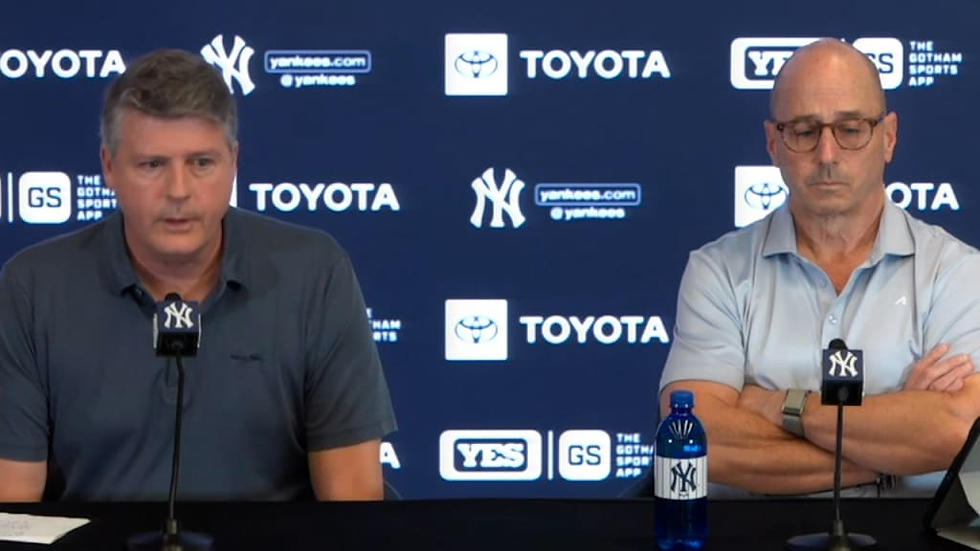
This is the series that is going to make me physically ill because I am a Yankees fan and Boston somehow always finds a way to turn a normal baseball game into six hours of stress. The Yankees won the season series 7-6 and host all three games, but Boston’s pitching staff is good enough that none of that makes me comfortable. The Red Sox are going with Payton Tolle in Game 1, Sonny Gray in Game 2 and Ranger Suárez if Game 3 is necessary. The Yankees counter with Cam Schlittler, Max Fried and Gerrit Cole. That is about as good a three-game pitching setup as you are going to see in a Wild Card Series.

Schlittler is the reason I feel best about Game 1. He finished 14-6 with a 1.95 ERA and 239 strikeouts and is the AL Cy Young favorite. He also already has postseason history against Boston after striking out 12 over eight scoreless innings against them in last year’s Wild Card round. Boston counters with Tolle, who went 9-6 with a 3.03 ERA and was excellent against New York this season, holding Yankees hitters to a .093 average with a 0.69 ERA in two starts. So this is not some obvious Game 1 advantage just because Schlittler has the better overall numbers. Tolle has specifically been a nightmare for this lineup.
Game 2 is where I really like the Yankees. Max Fried against Sonny Gray gives New York a veteran left-hander who finished with a 2.80 ERA against a pitcher who had an excellent season in Boston but has had some uncomfortable history in the Bronx. If the Yankees can win behind Schlittler and Fried, I would much rather this series end in two because Game 3 is the exact situation I do not want to see. Gerrit Cole has not been terrible this season, but a 3.61 ERA and his history against Boston are enough to make a winner-take-all game feel much more dangerous than it needs to be. Boston would counter with Ranger Suárez, who has plenty of postseason experience himself.
The lineup question is Aaron Judge. As of Tuesday morning, Judge had taken batting practice and was still pushing to be active after missing the final 10 games of the regular season with a calf strain, but Aaron Boone had not confirmed that he would be on the Wild Card roster. Judge hit .241 with 18 home runs in only 66 games this season after also missing significant time with a rib injury. Even if he is active, there is no guarantee he is close to 100 percent. That makes the Yankees more dependent on Cody Bellinger, Ben Rice, Heliot Ramos, Spencer Jones and Jazz Chisholm Jr. to carry the lineup. Boston has its own injury questions, including Willson Contreras, and its offense was inconsistent late in September, but Roman Anthony, Ceddanne Rafaela, Wilyer Abreu, Adley Rutschman and Trevor Story make this lineup deep enough to punish mistakes.
My heart says Yankees in two, and I am sticking with it. Schlittler today, Fried tomorrow, handshake line Wednesday night. That is the dream. If this gets to Thursday and we are asking Cole to close out Boston in a winner-take-all game, I will be considerably less confident than I am right now. Yankees in two, with a giant asterisk that I desperately do not want to see Game 3.
White Sox at Astros
This one annoys me on principle. Houston finished 81-81 and still gets to host the entire Wild Card Series because it won the AL West, while the White Sox went 84-78 and have to travel. Those are the rules, and Houston did what it needed to do, but an 81-81 division champion hosting a playoff series is exactly the kind of thing that makes people argue about postseason formats every October.

The pitching setup is unusual for both teams because of how the regular season ended. Chicago is starting rookie Hagen Smith in what manager Will Venable has already described as a bullpen-style Game 1, with Sean Burke expected to line up behind him for Game 2. Houston is doing essentially the same thing with rookie AJ Blubaugh opening Game 1 after the Astros had to burn through their rotation during the final weekend. Blubaugh was a multi-inning relief weapon all season and actually faced Chicago three times without allowing a run.
The White Sox lineup is young but interesting. Munetaka Murakami hit 35 home runs as a rookie, Miguel Vargas hit 33 with 93 RBIs and 22 stolen bases, and Kyle Teel gives them another dangerous left-handed bat near the top. Colson Montgomery is the wild card. He has huge power but also finished at .197 and struck out 227 times, setting a Major League single-season record. That is exactly the type of hitter who can either hit three homers in a short series or go 1-for-12 with eight strikeouts. Chicago also has a flexible bullpen, with Grant Taylor coming off a 2.25 ERA and 106 strikeouts in 84 innings and capable of being used for more than a conventional ninth inning.
Houston is still terrifying in one very important way: the top of the lineup. Yordan Alvarez won the AL batting title and finished at .316/.432/.601 with 42 home runs, 106 RBIs and 109 walks. Jeremy Peña was scorching down the stretch, Christian Walker finished hot and Jose Altuve is still Jose Altuve in October. The Astros also have Josh Hader sitting in the ninth after a 1.01 ERA and a perfect 26-for-26 season in save chances. If Houston gets a lead into the late innings, Chicago is going to have a serious problem.
But I am still taking the White Sox in three. Houston has way more postseason experience, won five of seven against Chicago this season and absolutely has the better late-game closer situation. I just cannot get past the fact that this was an 81-win team that had to exhaust its rotation simply to win the weakest division in baseball. Chicago is younger, less predictable and has enough power to make Houston pay if the bullpen game gets messy. White Sox in three.
My final picks are Phillies in three, Cubs in three, Yankees in two and White Sox in three. The Braves are probably the most dangerous team I am picking against, and Boston is absolutely the team most capable of ruining my night. That is what makes this opening round so good. There is no seven-game cushion. One bad inning tonight and an entire season can basically be hanging by a thread before Wednesday even starts.

Comments